Affiliate Click Fraud: How to Detect, Prevent & Validate Clicks

Affiliate Program Budget Lost to Fraud
Affiliate fraud costs the industry an estimated $3.4B a year. For a $1M/year program, that translates to $100K–$250K in fake commissions paid out to bad actors. (Source: Tapfiliate Defense Guide, 2026). See how we stopped a similar leak in our SaaS audit case study.
Table of Contents
Affiliate marketing operates on a simple premise: pay for performance. However, as programs scale, they attract bad actors looking to exploit tracking loops. Click fraud, cookie stuffing, and coupon hijacking can drain marketing budgets, giving commissions to publishers who add zero value. Understanding how to audit, validate, and prevent these practices is critical for safeguarding program ROI.
What Is Affiliate Click Fraud?
Affiliate click fraud is the deliberate generation of fake, automated, or non-converting clicks on affiliate referral links to manipulate tracking cookies and steal commissions. Unlike organic search traffic, which relies on genuine user engagement, click fraud tricks the merchant's tracking platform into attributing credit for sales to a fraudster who did not participate in the buyer's purchasing decision.
How Big Is the Problem?
Click fraud in affiliate marketing is not a minor leakage—it is a multi-billion dollar drain on B2B SaaS and eCommerce marketing budgets. Modern platforms require active tracking protection to prevent these leaks. Let's look at the key data highlighting the scope of affiliate channel fraud:
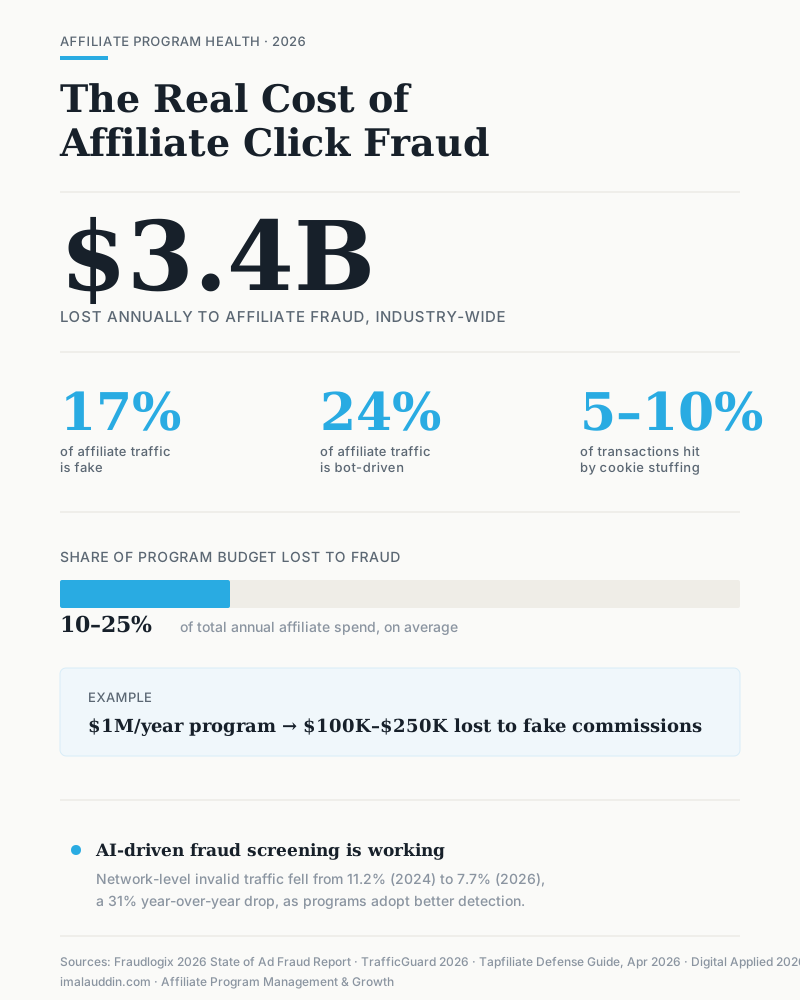
According to the Fraudlogix 2026 State of Ad Fraud Report, roughly 17% of all affiliate traffic is fake, and automated bot networks account for nearly 24% of all affiliate-channel activities. Research by TrafficGuard (2026) indicates that cookie stuffing alone affects 5% to 10% of total transactions in standard programs.
The financial impact is massive, costing merchants $3.4 billion annually in direct commission losses (Source: Fraudlogix / AffiliateBay, 2026). However, there is progress: AI-driven network-level screening has cut invalid traffic from 11.2% in 2024 to 7.7% in 2026, a 31% drop that proves screening tools are vital (Source: Digital Applied, 2026 Affiliate Marketing Statistics).
The 4 Main Types of Affiliate Fraud
To defeat fraud, you must first understand how bad actors manipulate affiliate networks. There are four primary types of fraud that program managers regularly encounter:
- Cookie Stuffing: Forcing tracking cookies onto a visitor's browser without their knowledge via hidden iframes, pop-ups, or 1x1 image pixels.
- Coupon Hijacking & Toolbars: Extensions that intercept shoppers at checkout, claiming credit for pre-existing sales.
- Bot Traffic & Click Spamming: Bots simulating millions of clicks to inflate referral counts or trigger CPC payouts.
- Attribution Hijacking: A highly sophisticated method where adware or malware on the customer's computer intercepts active purchase sequences to overwrite legitimate affiliate links with the fraudster's cookie right before checkout.
| Fraud Type | How it Works | How to Spot It | How to Stop It |
|---|---|---|---|
| Cookie Stuffing | Forces cookies via hidden elements/iframes. | High click volume with abnormally low CR. | First-party tracking scripts & tag checks. |
| Coupon Hijacking | Checkout extensions overwrite previous attribution. | Extremely short click-to-sale times (<30s). | Restrict coupon site commissions; clean policies. |
| Bot Click Spam | Scripts inflate click volumes dynamically. | Repeated IP subnets, unnatural CTR spikes. | IP rate-limiting & Captcha validation tools. |
| Attribution Hijack | Local adware swaps tracking cookies mid-session. | Frequent cookie overwrites in tracking logs. | Encrypted click validation tokens & secure APIs. |
What Is Click Validation?
Click validation is the automated technical process of verifying that an affiliate referral click comes from a real human user showing genuine interest before writing or modifying any tracking cookies. This acts as a real-time gateway rather than a retro-active audit, blocking fraudulent interactions at the threshold.
How Click Validation Actually Works
Rather than blindly accepting every incoming query parameter, a modern tracking configuration uses a combination of real-time filters:
- IP Subnet Checks: Instantly cross-references the user's IP against known data center ranges, proxy servers, and VPN lists to filter non-residential bots.
- Conversion Timing Logic: Logs the exact millisecond of the click and compares it to the final purchase callback. Clicks that lead to checkout actions in under 15 seconds are flagged as automatic redirects.
- Device Fingerprinting: Inspects browser metadata, screen dimensions, font layouts, and user agents to match standard browser profiles, detecting headless browser instances and bot emulation patterns.
How to Detect Affiliate Fraud: A 3-Point Audit Checklist
To maintain program integrity, make it a habit to audit affiliate logs on network dashboards (like Impact, ShareASale, or PartnerStack) using these criteria:
Flag affiliates whose click-to-conversion window is under 30 seconds. A customer cannot land on a homepage, browse, choose a product, and enter credit card details in 10 seconds; this signals coupon extension hijacking.
Analyze affiliates sending massive click volumes but converting at less than 0.05%. While high-volume affiliates exist, numbers this skewed frequently point to background cookie stuffing scripts.
Check for multiple separate referral purchases occurring from the same IP address or subnet blocks within a short timeframe. This is a common footprint of checkout bot networks or manual self-purchasing fraud.
How to Prevent Click Fraud in Affiliate Marketing
Preventative policies are far better than manual audits. Protect your program by establishing:
- Strict Terms of Service: Establish legal boundaries. Expressly ban browser-extension redirects, cookie stuffing, trademark bidding (TM+ keyword poaching), and self-referrals. Make it clear that policy violations lead to immediate program bans and commission forfeitures.
- Platform Settings: Utilize platform tools (like Impact's fraud detection engine or ShareASale's compliance alerts) to automatically hold commissions for suspicious referrals.
- Dedicated Tracking Setup: Ensure your attribution system uses first-party cookies and script-based tracking to bypass browser-based cookie blocks.
Affiliate Fraud Prevention Solutions & Tools
Securing a scaling program requires specialized tracking technologies. Modern networks like Impact.com provide native tracking protection tools, and platforms like PartnerStack offer built-in payout validation rules.
However, native system rules are only as good as the configuration and active auditing behind them. In many cases, fraudsters find pathways around automatic filters by shifting tactics. This is where a professional, independent managed audit comes in. By conducting a deep-dive assessment of your tracking setup, affiliate logs, and commission flows, you can shut down active payout leaks and optimize your tracking rules.
If you want to ensure your affiliate program is driving real incremental revenue, check out my dedicated Affiliate Program Audit service to analyze and secure your channel metrics.
Frequently Asked Questions (FAQ)
What is affiliate click fraud?
Affiliate click fraud is when bad actors manipulate affiliate tracking, through cookie stuffing, bot clicks, or coupon hijacking, to collect commissions they didn't legitimately earn.
How do I know if my affiliate program has fraud?
Watch for outlier conversion windows under 30 seconds, affiliates with high click volume but very low conversion rates, and repeated transactions from the same IP subnet.
What percentage of affiliate traffic is fraudulent?
Industry estimates put fake affiliate traffic at around 17%, with bot-driven activity accounting for roughly 24% of all affiliate channel traffic as of 2026.
Is click fraud illegal?
Click fraud typically violates a network's and merchant's terms of service, which can lead to account termination and clawed-back commissions, and in serious commercial cases it can also constitute wire fraud.
What's the difference between click fraud and ad fraud?
Click fraud is a subset of the broader ad fraud category. Ad fraud covers all forms of fake traffic and invalid impressions across advertising, while click fraud specifically refers to fraudulent clicks used to trigger a commission or ad spend.
Methodology & Sources: Data stats cited in this guide are collected from verified practitioner industry sources, including the Fraudlogix 2026 State of Ad Fraud Report, TrafficGuard compliance audits, and Tapfiliate's April 2026 guide on program security. Figures are reviewed and updated periodically to reflect active programmatic and affiliate security standards.
Last updated: July 2026.